Wet Space Renovations in Los Angeles County
Hagop · · 12 min read
Discover expert wet space renovation in Los Angeles County with Renown Baths. Call to get a free in-person estimate and ensure lasting waterproofing by experienced professionals.
Los Angeles County homeowners know the frustration of a tub surround that won't stay sealed, grout lines that have turned dark, or walls that feel spongy behind the tile. When water finds its way past cracked caulk or failing membranes, the damage spreads fast—into studs, subfloors, and framing you can't see until the wall comes down. Renown Baths handles wet space renovations in Los Angeles for showers, tub decks, and waterproofed wet walls, serving Glendale, Pasadena, Burbank, Santa Monica, and dozens of other cities across the county from a four-person crew at 421 W Palmer in Glendale. CEO Hagop Semerdjin's team has spent more than 27 years in the trade tearing out compromised surfaces, building code-compliant waterproofing, and installing new fixtures that homeowners can scrub down without fear. This guide explains what wet space renovation covers, why Southern California's older housing stock demands proper waterproofing, and how Renown Baths prices the work at least 20 percent under big-name bathroom brands.
What Qualifies as a Wet Space Renovation
A wet space is any vertical or horizontal surface inside a bathroom that meets running water or sustained splash every day. Renown Baths defines wet space renovations to include shower alcoves, combination tub-shower enclosures, standalone tub decks with tile surrounds, and the walls immediately behind a showerhead or handheld spray. The scope does not extend to vanities, toilets, or dry flooring outside the splash zone; that work falls under full bathroom remodeling. By keeping the project boundary tight to surfaces that stay wet, the crew can demo, waterproof, tile, and install fixtures in fewer days than a whole-room teardown, and homeowners pay only for the square footage that truly needs a moisture barrier and new finishes.
Showers and Tub-Shower Combos
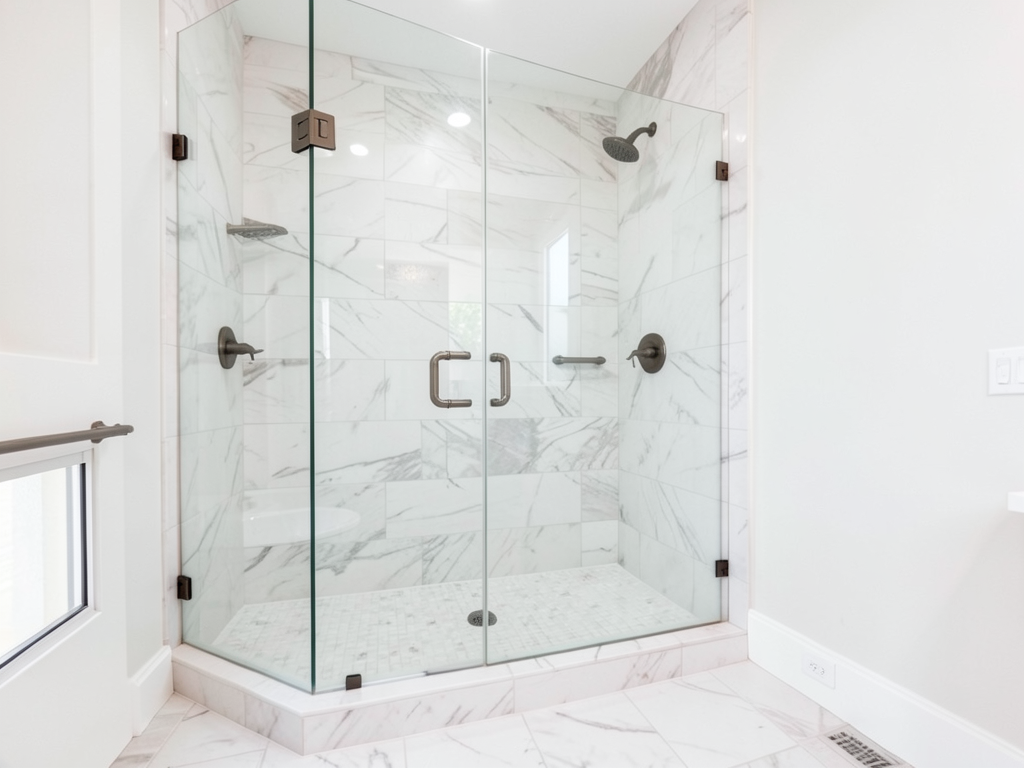
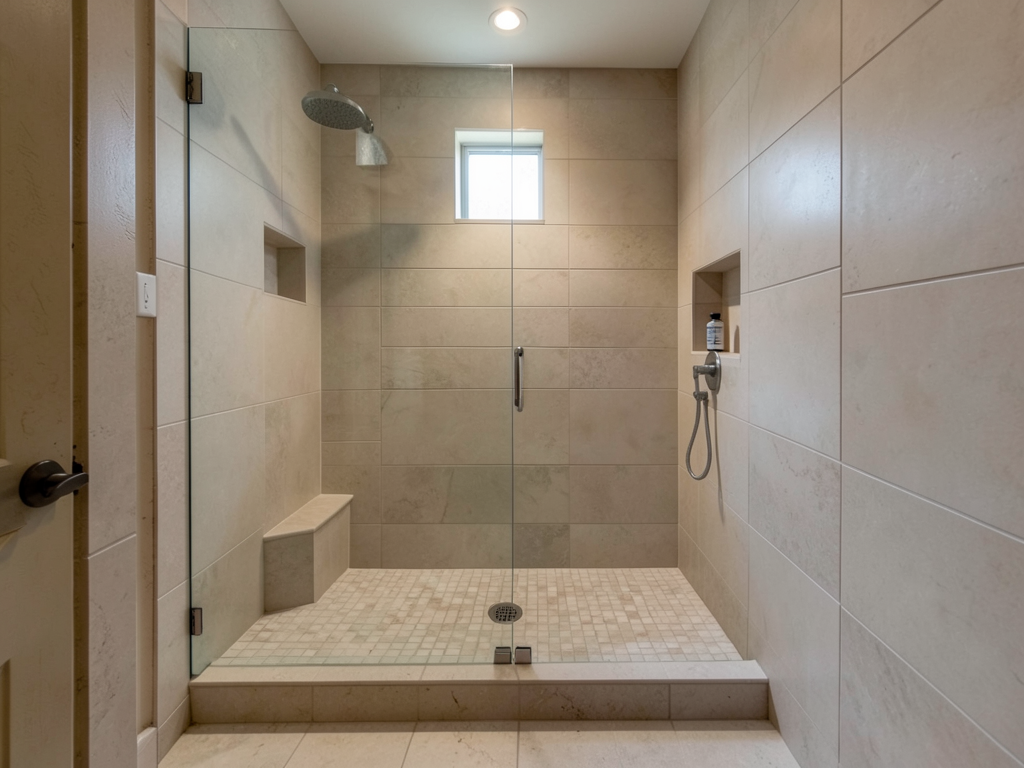
Walk-in showers and tub-shower alcoves share the same waterproofing requirements under California plumbing code. The sales rep measures wall height—typically eight feet in a shower, six feet around a tub—and notes the locations of valve stems, drain centerlines, and any backing for grab bars or corner shelves. The crew removes old tile or acrylic panels, inspects studs for mold or rot, then installs a liquid-applied or sheet membrane before setting new tile. Renown Baths includes niches, benches, and grab-bar blocking when the layout calls for them, so the finished space meets both the homeowner's daily routine and any aging-in-place goals without a separate change order.
Standalone Tub Decks
Freestanding tubs rarely need waterproofed walls unless a deck-mounted faucet or handheld wand splashes the surrounding surface. Drop-in tubs, by contrast, often sit inside a tiled platform with vertical faces that catch spray every time someone rinses off. The platform deck itself must be sloped to drain and sealed at every seam; water that puddles on a flat ledge will wick into grout joints and rot the plywood underneath. The Renown Baths crew removes the old tub, cuts out damaged decking, rebuilds the frame with proper slope, applies waterproofing, then sets tile and reinstalls the tub with fresh plumbing connections. The project stays within the wet-space category because the vanity, floor beyond the tub, and lighting remain untouched.
Why Los Angeles County Homes Develop Wet-Space Failures
Southern California's housing stock spans Art Deco apartments in Downtown Los Angeles, ranch homes across the San Fernando Valley, and post-war tracts in Torrance and Long Beach. Many bathrooms were built between the 1940s and 1980s, when builders fastened green-board drywall or cement backerboard directly to studs and relied on grout and caulk to keep water out. Modern code requires a continuous waterproof membrane behind tile; older installations lack that barrier, so decades of daily showers have soaked through grout, swelled the backerboard, and fed mold in the wall cavity. Even homes that received a quick flip in the early 2000s may have new tile over old, unprotected framing.
Seasonal Moisture and Ventilation
Los Angeles County enjoys dry summers, but morning marine layer and winter rain still deliver humidity spikes. A bathroom without an exhaust fan or an operable window traps steam against tile every time someone showers, accelerating grout breakdown and caulk separation. Homes in coastal neighborhoods—Santa Monica, Redondo Beach, Manhattan Beach—face salt air that corrodes metal drain flanges and valve trim, while inland areas like Pasadena and Glendale see temperature swings that expand and contract grout joints. Renown Baths installs waterproofing that bridges those joints and prevents moisture from ever reaching the framing, regardless of whether the homeowner remembers to flip the fan switch.
Improper Retrofit Layers
Budget bathroom updates often layer acrylic wall panels or peel-and-stick tile over existing surfaces to avoid demolition. When the old tile underneath already leaked, the new layer traps moisture against moldy drywall, and the problem spreads. Renown Baths tears retrofit systems down to the studs during the free in-person estimate visit so the sales rep can photograph any hidden damage and write an accurate scope. Homeowners who skip that step and accept a phone quote from a competitor discover mid-job that the "simple overlay" has turned into a full gut, blowing the budget and timeline.
How Renown Baths Prices and Schedules Wet Space Renovations
The shop's typical bathroom work sits around ten thousand five hundred to fourteen thousand five hundred dollars, a range that includes both tub-to-shower conversions and wet space renovations. A standalone shower refresh with standard tile and a single valve usually lands near the lower end; a tub-deck rebuild with custom mosaic, a freestanding filler, and deck-mounted jets climbs higher. The sales rep measures the space, counts fixture rough-ins, discusses tile grade and niche count, then delivers a line-item estimate on the spot or within twenty-four hours. No photo-based quote, no national call center—Renown Baths sends a rep to the house for thirty minutes, and the pricing reflects exactly what that crew will encounter when they return with tools.
What the Estimate Includes
- Demo and haul-off of tile, pan, backerboard, and fixtures noted in the original quote.
- Waterproofing applied to studs, curbs, and subfloor inside the wet zone.
- Tile or solid-surface wall panels up to the agreed height, with bullnose or schluter trim at exposed edges.
- Fixtures and trim such as valve, showerhead, tub spout, or deck-mounted faucet.
- Niches and benches when the layout plan calls for them.
- Grab-bar blocking installed between studs if the homeowner requests specific locations.
- Cleanup before the crew leaves, including a walkthrough to confirm grout lines, caulk beads, and drain function.
Renown Baths does not include vanity replacement, toilet swap, general flooring outside the shower pan, or lighting upgrades unless the homeowner adds those line items and converts the project to full bathroom remodeling.
Same-Day Callback and Estimate Windows
Homeowners call (888) 955-2284, email jack@renownbaths.com, or submit the form at renown-home-builders.vercel.app/contact. The team replies the same day to book a free in-person estimate. Available windows run Monday through Thursday at ten a.m., one p.m., and four p.m., plus Friday and Saturday at ten a.m. and one p.m. The sales rep arrives with a tape measure, moisture meter, and camera; walks the bathroom; asks about fixture preferences and accessibility needs; then writes the scope. Financing is available—ask during the visit for current terms.
Waterproofing Methods Renown Baths Uses
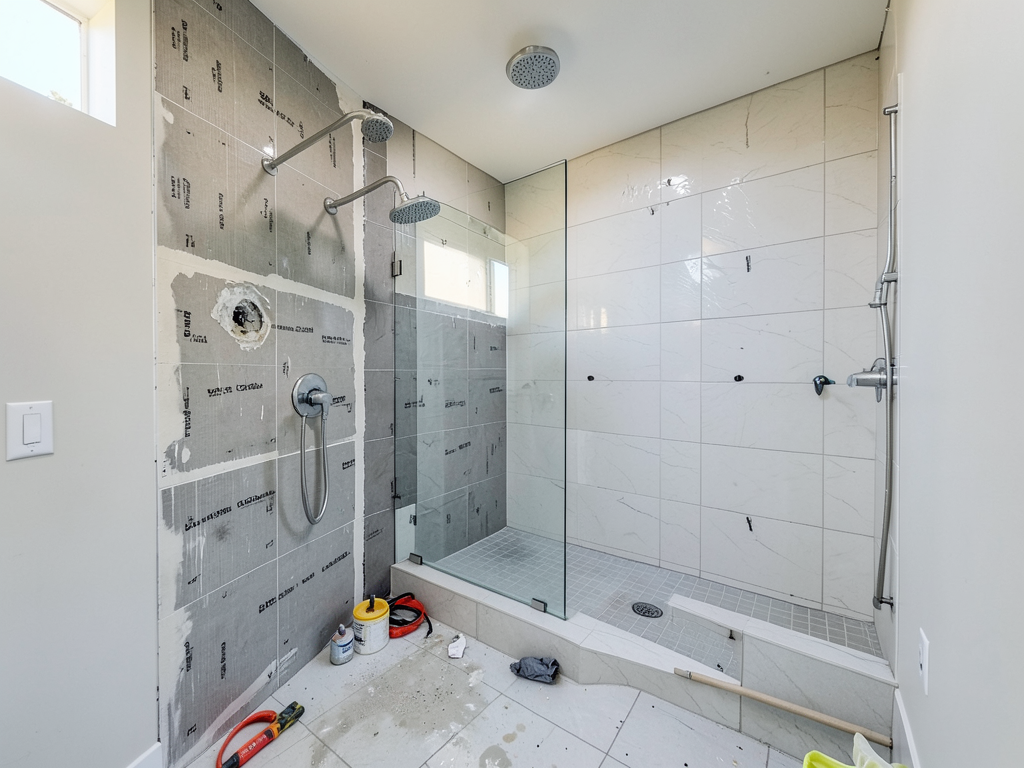
California Plumbing Code and the International Residential Code both require a water-resistant barrier behind tile in tub and shower areas. Renown Baths meets that mandate with liquid-applied membranes or sheet systems, depending on substrate condition and project timeline. Liquid membranes—troweled or rolled onto clean backerboard—cure to form a seamless rubber layer that bridges corners, curbs, and penetrations without mechanical fasteners. Sheet membranes arrive in rolls with adhesive backing and overlap at seams; the crew heat-welds or tapes joints to maintain continuity. Both methods prevent water from reaching studs, but liquid applications handle complex geometries like curved benches or sloped decks more easily than pre-cut sheets.
Pan and Curb Details
A shower pan must slope one-quarter inch per foot toward the drain and integrate with the wall membrane so water cannot escape at the floor-wall joint. Renown Baths builds pans with sloped mortar over a vinyl or CPE liner, or uses factory-molded foam trays that arrive pre-sloped and ready for tile. The curb receives waterproofing on all faces—inside, outside, and top—because water splashes both directions and gravity pulls moisture down through any unsealed grout joint. The crew test-floods the pan before tiling by plugging the drain, filling the base two inches deep, and watching for leaks; if the water level drops or a stain appears on the ceiling below, they repair the membrane and test again.
Fixture Penetrations and Backing
Every valve stem, showerhead arm, tub spout, and drain flange punctures the waterproof layer. The crew seals each penetration with membrane collars or boots that clamp onto the pipe and bond to the surrounding barrier, then verifies the seal before closing the wall. Grab bars require solid blocking—two-by-six or two-by-eight lumber installed horizontally between studs—so screws bite into wood rather than relying on drywall anchors. Renown Baths places blocking at heights the homeowner specifies during the estimate visit, typically thirty-three to thirty-six inches above the floor for a horizontal bar and higher for a vertical grab. The waterproofing membrane wraps over the face of the blocking, so future bar installation does not compromise the barrier.
Tile and Surface Options for Los Angeles Wet Spaces
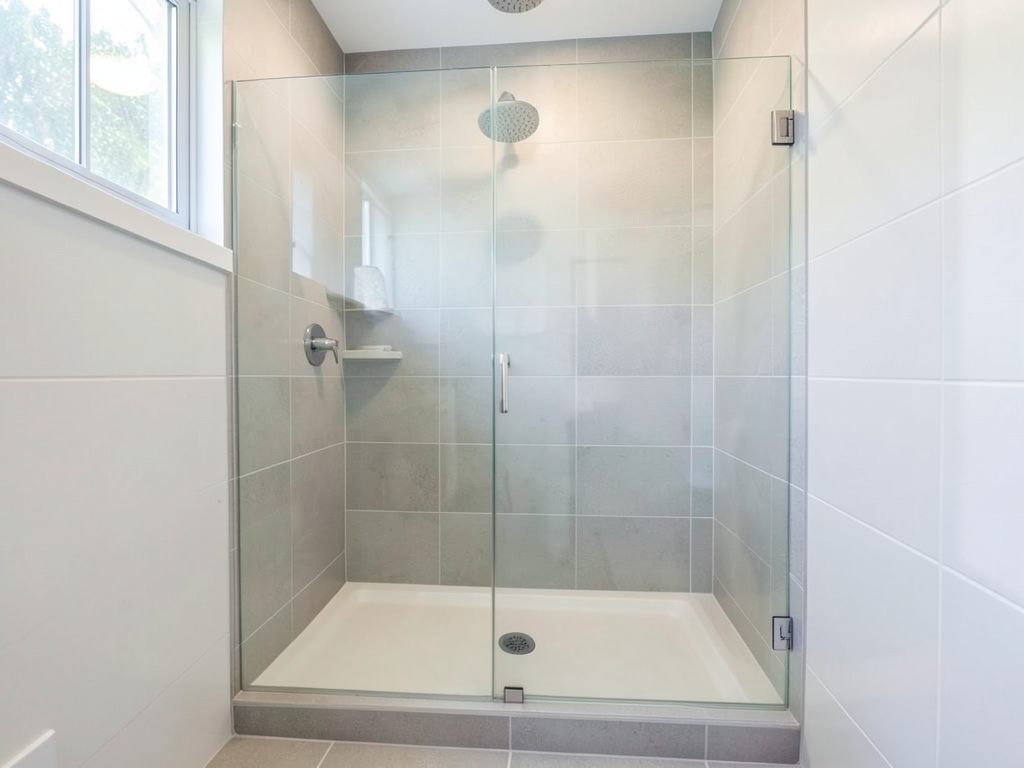
Renown Baths offers ceramic, porcelain, and natural stone tile in standard field sizes plus mosaic sheets for accents, niches, and floors. Porcelain outsells ceramic three to one because it absorbs less water and resists staining; natural stone—marble, travertine, slate—requires annual sealing and shows etching from acidic cleaners, so the sales rep reviews maintenance expectations during the estimate. Solid-surface wall panels made from acrylic or composite materials provide a grout-free alternative; the crew glues panels to waterproofed backerboard and trims seams with color-matched caulk. Panels install faster than tile and never need grout refresh, but homeowners who want custom borders, herringbone niches, or mosaic accents will choose tile.
Grout and Caulk Longevity
Epoxy grout lasts decades without sealing and resists mold better than cementitious grout, but it costs more per bag and requires experienced troweling to avoid haze. Renown Baths uses epoxy in steam showers and high-splash zones, standard polymer-modified grout elsewhere. Every change-of-plane joint—where wall meets floor, wall meets curb, or tile meets fixture—receives silicone or urethane caulk instead of grout, because those joints flex with building movement and caulk stretches without cracking. The crew tools caulk beads smooth and leaves no voids where water can collect.
Common Wet Space Renovation Scenarios Across Los Angeles County
The Renown Baths crew encounters recurring patterns tied to the county's housing eras and neighborhood layouts. Understanding these scenarios helps homeowners recognize which signs demand immediate attention and which can wait for a planned renovation cycle.
1950s Tile Over Drywall in Eagle Rock and Highland Park
Post-war bungalows in Northeast Los Angeles often feature four-by-four pastel tile set over green-board drywall with no waterproof membrane. Homeowners notice soft spots behind the bottom tile row or see rust stains at the tub spout. Renown Baths removes tile, cuts out wet drywall, and replaces it with cement backerboard and liquid membrane before installing new tile. The project stays within wet-space scope because the vanity and toilet remain; only the three tub-surround walls and the tub itself change.
Acrylic Retrofit Failure in San Fernando Valley Tracts
Tract homes in Van Nuys, North Hollywood, and Reseda received acrylic tub-liner and wall-panel kits during quick flips in the 2000s. The panels were glued over old tile, trapping moisture and mold. When seams separate or panels crack, water floods the wall cavity. The estimate visit reveals black mold on studs and requires full demo back to framing, mold remediation if necessary, then code-compliant waterproofing and tile. Renown Baths provides photos of the hidden damage so homeowners understand why the acrylic shortcut failed.
Leaking Tub Deck in South Bay Beach Cities
Redondo Beach, Hermosa Beach, and Manhattan Beach homes with soaking tubs often tile the deck surround without proper slope or membrane. Water puddles on the flat ledge, seeps into grout, and rots the plywood deck. The crew removes tile and tub, rebuilds the deck with sloped mortar, waterproofs every surface, then sets tile and reinstalls the tub. Fixtures upgrade to hansgrohe or Delta if the homeowner wants better spray patterns, but the core work remains wet-space focused—no vanity, no floor replacement outside the tub zone.
Grab Bars, Benches, and Aging-in-Place Details
Wet space renovations offer the ideal moment to install blocking for future grab bars, even if the homeowner does not mount hardware immediately. Renown Baths places two-by-six blocking horizontally at the heights requested—one bar near the valve, one along the back wall, and a vertical bar at the entry if the layout allows. The waterproofing membrane covers the blocking face, and tile goes on top; when the homeowner later decides to install bars, screws bite into solid wood and hold three hundred pounds without tearing the membrane. The same logic applies to fold-down benches and corner shelves: the estimate visit is the time to specify locations, so the crew builds supports into the wall before tiling begins.
Curb-Free and Low-Threshold Entries
A true curbless shower requires lowering the bathroom floor or raising the drain, work that crosses into full remodeling territory. Renown Baths can build a low threshold—two to three inches high—by recessing the pan slightly and using a linear drain at the entry. The barrier remains tall enough to contain splash but low enough for someone with limited mobility to step over. When the project includes a curb-free design, the sales rep explains subfloor modification, floor-height transitions, and code requirements during the in-person estimate so the homeowner knows the full scope before signing.
How Long a Wet Space Renovation Takes in Glendale and Beyond
A straightforward shower refresh—demo old tile, waterproof, install new tile and valve—typically runs three to five days once the crew arrives. Tub-deck rebuilds withomortar slopes and freestanding tub placement add a day or two. If the estimate uncovers rot, the schedule extends to include stud replacement and mold treatment. Renown Baths does not overlap jobs; the four-person crew finishes one bathroom before starting the next, so the timeline printed on the estimate reflects dedicated attention rather than a rotating cast of subcontractors. The shop serves Glendale, Burbank, Pasadena, Los Angeles, Santa Monica, Long Beach, Torrance, Santa Clarita, and dozens of other Los Angeles County cities within sixty miles of the 91204 shop, but declines work in Riverside, San Diego, and Orange County to keep drive times manageable.
Why Renown Baths Turns Down Non-Bathroom Work
Renown Home Builders operates as Renown Baths and accepts only bathroom projects—no kitchens, no roofs, no room additions. The intake form asks applicants to confirm the work involves a tub, shower, or wet wall; requests for other trades receive a written decline. That focus lets the crew carry tile saws, waterproofing tools, and plumbing fittings in the truck every day without juggling carpentry or electrical gear for unrelated jobs. Homeowners benefit from a team that has tiled thousands of shower pans and knows every quirk of California plumbing code, rather than a general contractor who does bathrooms twice a year between kitchen remodels.
When to Call for a Free In-Person Estimate
Homeowners should request an estimate when they notice spongy walls behind tile, grout that crumbles when scraped, caulk gaps wider than an eighth inch, rust stains below the showerhead, or water stains on the ceiling of the room below the bathroom. Waiting allows rot to spread into floor joists and studs, raising demolition costs and lengthening the schedule. The Renown Baths sales rep brings a moisture meter to the visit, tests suspect areas, and photographs any damage so the quote reflects real conditions. Call (888) 955-2284, email jack@renownbaths.com, or submit the form at renown-home-builders.vercel.app/contact to book a thirty-minute visit during one of the Monday-through-Saturday estimate windows. The callback arrives the same day, and the in-person look costs nothing—even if the homeowner decides to wait six months or chooses a different contractor.
Final Walkthrough and Cleanup Protocol
Before the crew leaves, they run water in the shower or tub for ten minutes to verify drain flow and check every caulk joint for beading. The sales rep or lead installer walks the homeowner through grout color, niche placement, fixture operation, and any grab-bar blocking locations marked on the wall. The crew hauls demolition debris to a licensed dump, vacuums tile dust, and wipes down surfaces. Renown Baths does not leave the job until the homeowner confirms the wet space matches the scope and functions as expected. That protocol, combined with more than 27 years in the trade and licensing details available on request during the estimate visit, explains why the Glendale shop has built a reputation for transparent pricing and accountability across Los Angeles County's competitive bathroom market.
Start with a free in-person estimate
Free in-person estimates. The team answers same day. Visits run about 30 minutes.
Get a Free Estimate